


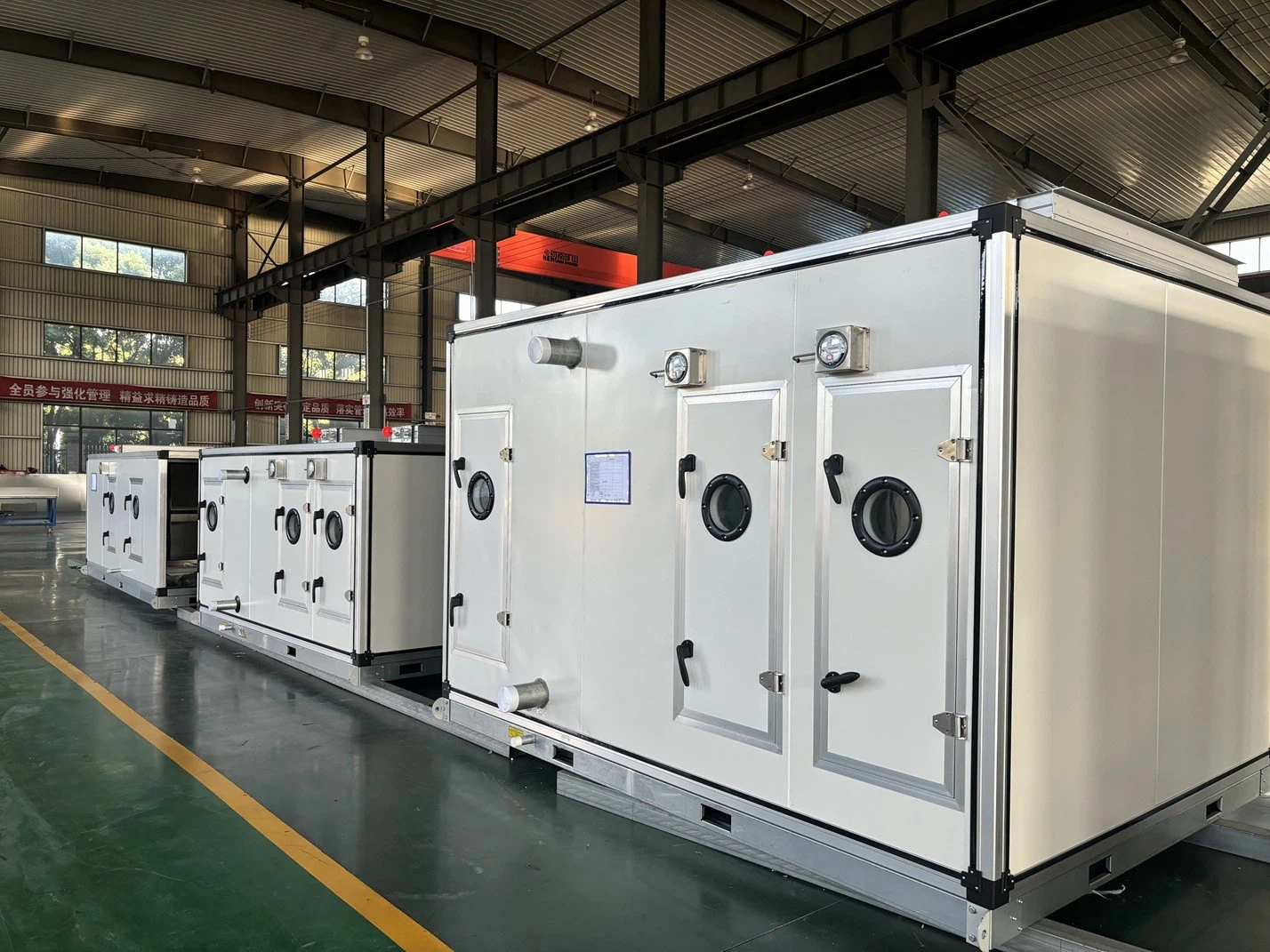
In HVAC (Heating, Ventilation, and Air Conditioning) systems, the Air Handling Unit (AHU) is an indispensable component. Primarily designed to condition air in buildings, factories, and industrial facilities, the AHU maintains a comfortable and safe environment for occupants. This article provides a detailed insight into AHUs, cấu tạo, nguyên lý hoạt động, cũng như các lợi ích mà thiết bị này mang lại.
What is an AHU? Overview of Air Handling Units
Definition of AHU and its Importance in HVAC Systems
What is an AHU? It is a device integrated into HVAC systems to process and supply air. This unit performs filtration, cooling or heating, and humidity control before distributing the air throughout the building's internal spaces. With its high-capacity air processing capabilities, the AHU ensures a clean and regulated indoor environment.
Differences between AHUs, FCUs, and related equipment
Although AHUs and FCUs (Fan Coil Units) are both essential HVAC components, they differ significantly in function. AHUs are primarily designed for centralized air processing across the entire building system, whereas FCUs are typically utilized for localized air distribution and temperature control within specific zones.
Common Applications of AHUs in Industrial and Commercial Sectors
AHUs are widely utilized in industrial facilities, commercial centers, hospitals, and office buildings. These environments require stringent air control to maintain ideal working conditions, ensuring occupant comfort and health.
AHU Construction
Comprising components such as fans, AHU filters, and heat exchange systems, the AHU ensures comfort while enhancing energy efficiency. However, periodic AHU maintenance is essential to ensure stable and efficient system operation.
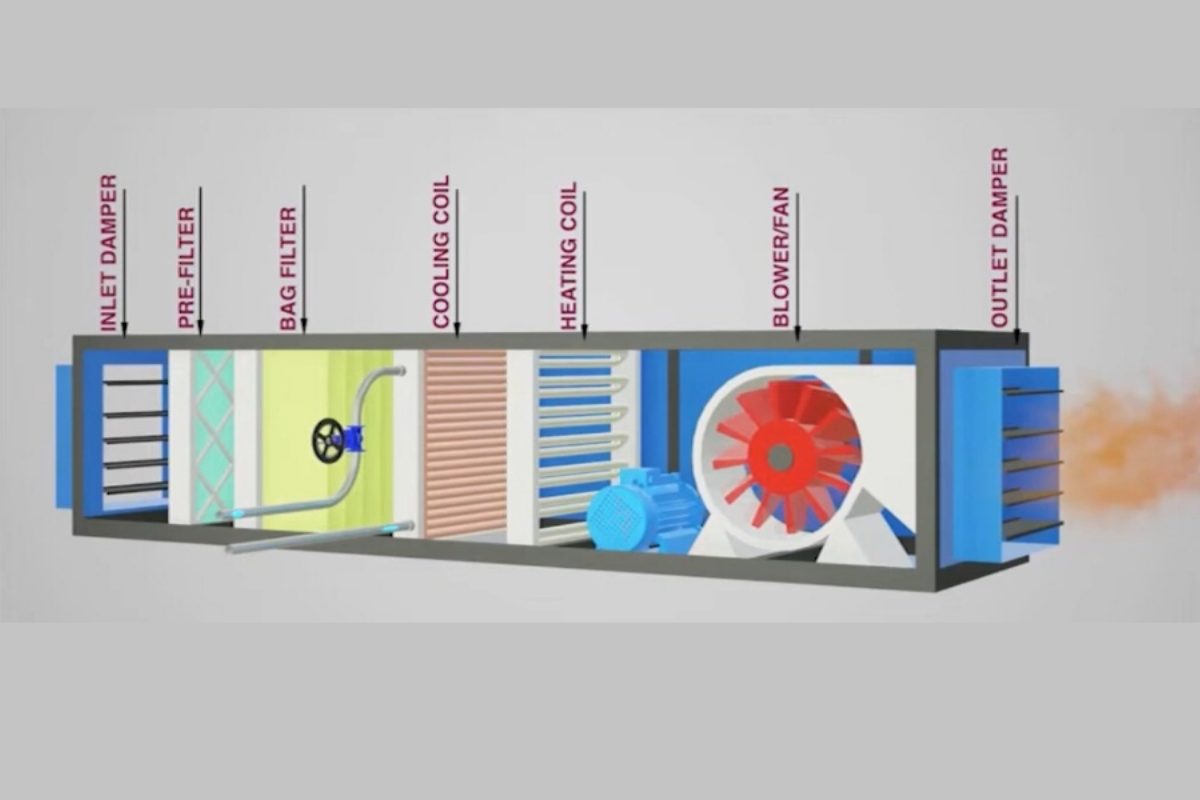 Source https://www.youtube.com/watch?v=wqESXBjVJcg
Main Components of an AHU
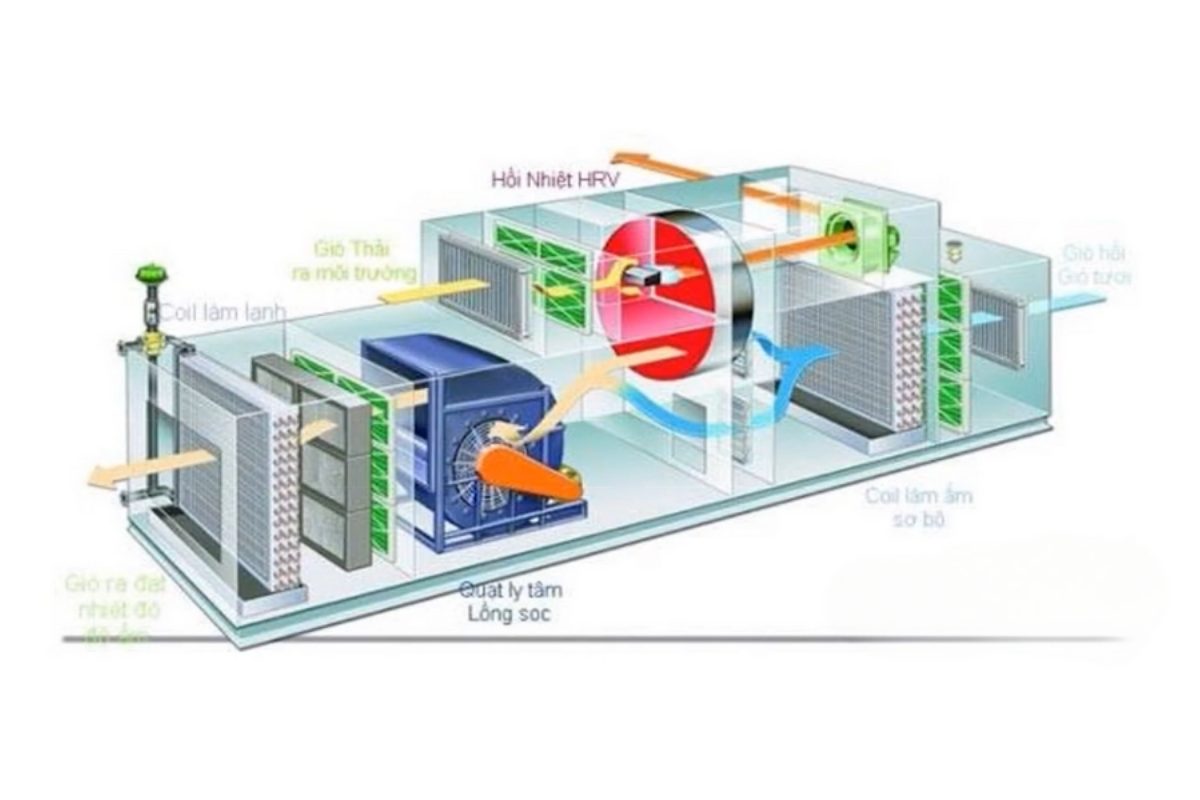
An AHU typically consists of primary components such as air filters, fans, cooling or heating coils, and humidity control elements. These components operate in integration to process air, ensuring that the supply air consistently meets required standards.
Functions of Individual Components in the Air Treatment Process
- AHU Air Filters: Remove dust and airborne contaminants.
- Cooling/Heating Coils: Modulate air temperature to reach the desired setpoints.
- Fans: Responsible for air circulation, ensuring uniform distribution of treated air to the designated areas.
Differences Between Traditional and Modern AHUs
Modern AHUs are equipped with advanced technologies, such as high-efficiency filtration systems, which enhance energy savings and environmental protection. Newer AHU models also feature improved control and automation capabilities, simplifying the AHU maintenance process.
AHU Classification by Heat Transfer Medium
AHUs can be classified based on the type of medium used for air processing. The two common types are Water AHUs and DX (Direct Expansion) AHUs..
Water AHU
A Water AHU is an air handling unit that utilizes water as the heat transfer medium. Chilled water (from a Chiller) or hot water (from a Boiler) is circulated through heat exchange coils (Cooling or Heating Coils) inside the AHU to cool or heat the air before it is delivered to the conditioned space.
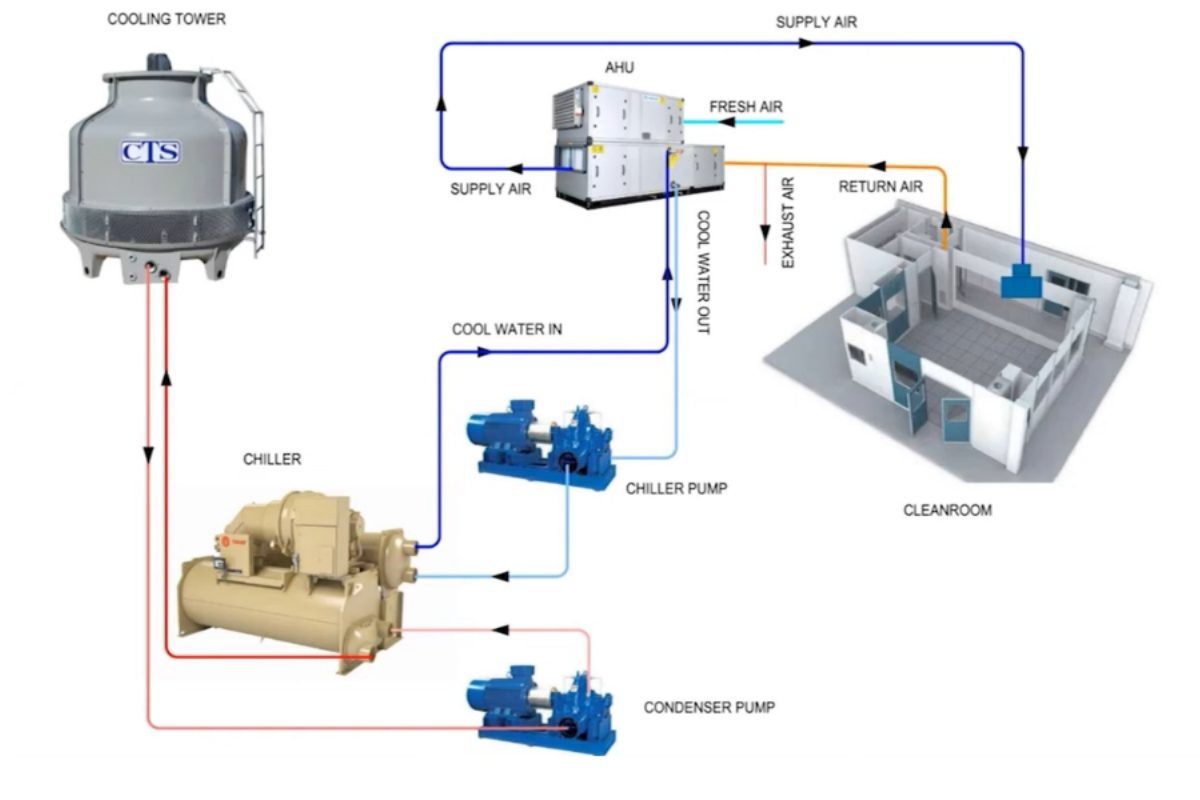 Schematic Operating Principle of Water AHUs
DX AHU
A DX AHU (Direct Expansion AHU) is an air handling unit that utilizes refrigerant as the heat exchange medium. Refrigerant (such as R134a, R410A) is supplied directly from the compressor system and flows through the coils inside the AHU to cool the air.
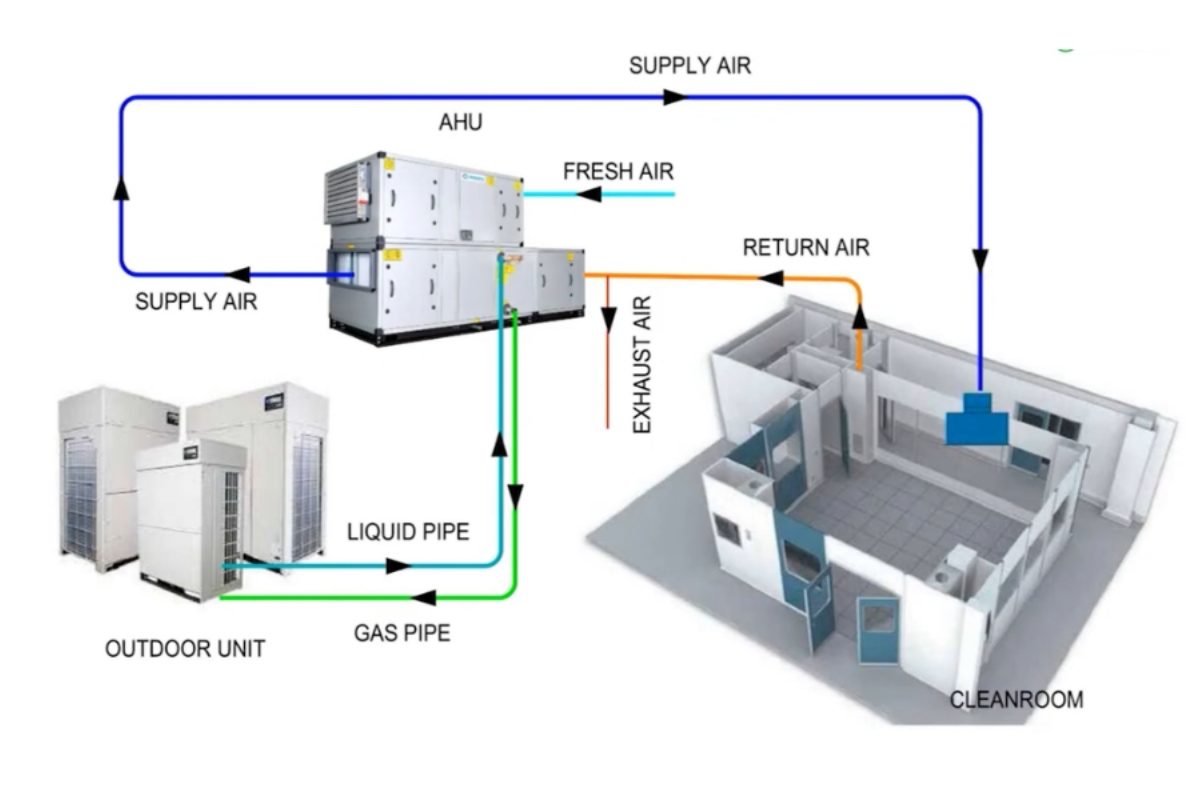 Operating Principle of DX AHUs
Source: intech
AHU Operating Principle
Air treatment process from inlet to outlet
The air treatment process in an AHU begins by drawing in outdoor or return air. This air passes through filters to remove contaminants. Subsequently, the air is cooled or heated, humidity is adjusted, and it is then distributed to various zones within the building.
AHU Integration in HVAC Systems
The AHU is a central component of an HVAC system, ensuring efficient air conditioning. In conjunction with other equipment like FCUs and chillers, the AHU maintains stable temperature and humidity levels in living and working spaces.
Temperature, Humidity, and Air Quality Control
Modern AHUs can automatically modulate air temperature and humidity. This creates a comfortable environment for occupants and ensures that the air consistently meets standard air cleanliness levels.
Common AHU Types in the Market
Standard AHUs and Customized AHUs
Depending on application requirements, AHUs can be selected as standard or customized models. Customized AHUs are suitable for large-scale projects with specific air quality requirements.
Comparison of Industrial and Commercial AHUs
Industrial AHUs typically feature high capacity and robust designs suitable for harsh operating environments. In contrast, commercial AHUs are more compact and ideal for office buildings or shopping centers.
Technological Advancement Trends in AHU Design
Emerging technologies, such as high-efficiency AHU air filters and automated AHU maintenance systems, are becoming increasingly prevalent, enhancing energy efficiency and reducing operating costs.
Benefits of Using AHUs
Improving Energy Efficiency in HVAC Systems
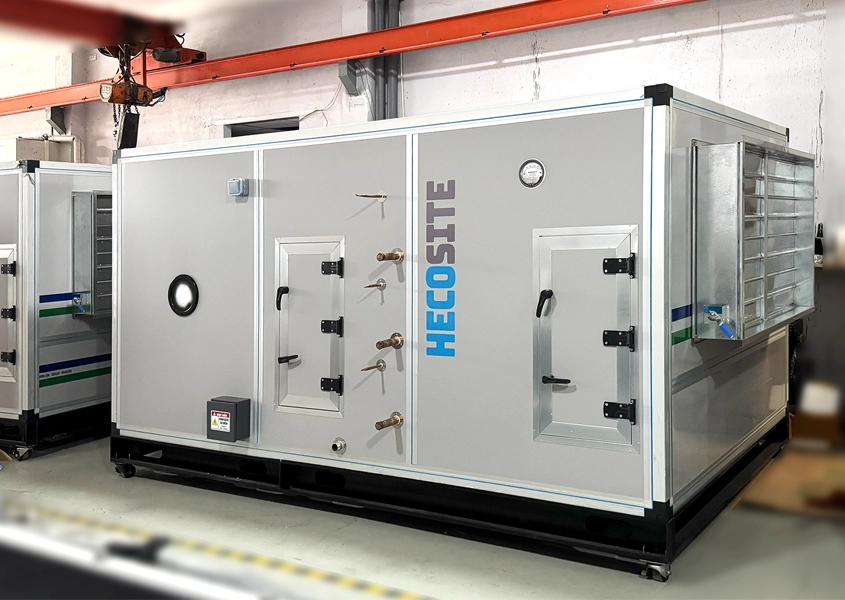
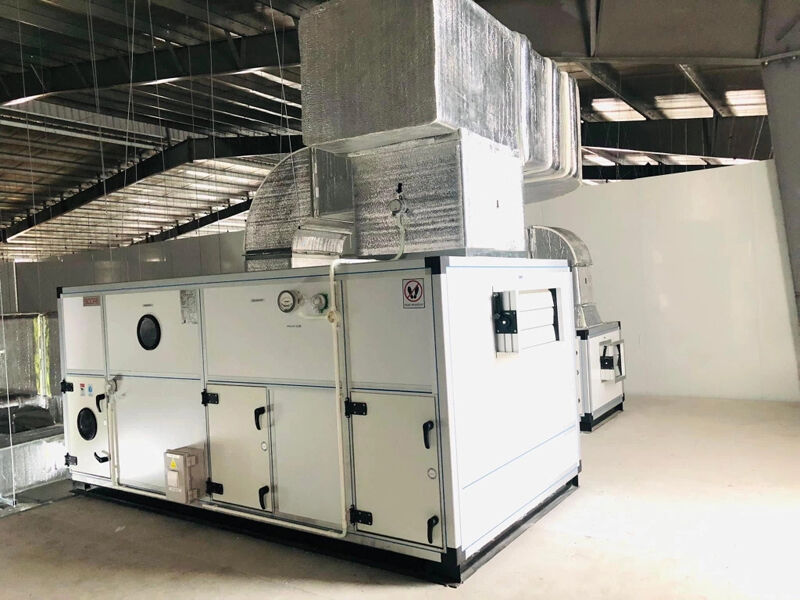
Implementing Air Handling Units (AHUs) is a key solution for enhancing HVAC system energy efficiency. AHUs operate by optimizing airflow and air quality control, thereby reducing the load on cooling or heating equipment. This minimizes power consumption and carbon emissions, contributing to environmental protection.
Benefits of Using AHUs
Furthermore, modern AHUs integrate Variable Frequency Drive (VFD) technology and smart sensors to automatically modulate fan speed and capacity based on real-time demand, maximizing system efficiency and eliminating energy waste.
Improving Indoor Air Quality (IAQ)
Indoor Air Quality (IAQ) directly impacts human health and comfort, particularly in enclosed environments such as offices, schools, hospitals, or commercial centers. AHUs play a critical role in controlling IAQ by:
- Filtering dust and bacteria through various filtration stages, from pre-filters to HEPA filters.
- Modulating humidity to inhibit the growth of harmful microorganisms.
- Providing the necessary fresh air supply to maintain oxygen levels and reduce concentrations of harmful gases like CO2.
Consequently, this creates a cleaner environment, enhancing productivity and minimizing the risk of respiratory illnesses or allergies.
Improving Energy Efficiency in HVAC Systems
Reducing Maintenance and Operating Costs
By integrating modern design and manufacturing technologies, AHUs not only reduce operating costs but also extend the service life of the HVAC system. Key highlights include:
- Integrated self-diagnostic systems: Early detection and alerts for potential issues, reducing downtime and major repair costs.
- Durable materials: Utilization of insulated casings and corrosion-resistant components ensures long-term operational reliability.
- Ease of maintenance: Modular designs allow for rapid assembly and disassembly, saving time and labor during cleaning or component replacement.
This optimization minimizes direct costs while ensuring stable HVAC operation and enhancing overall long-term efficiency.
Selecting the Right AHU
AHU selection criteria based on application requirements
When selecting an AHU, it is essential to consider the floor area, occupancy levels, and specific temperature and humidity requirements. Precise selection optimizes the system's operational performance.
Key Technical Specifications for Reference
Parameters such as fan capacity, filtration efficiency, and cooling capacity are critical factors to evaluate during the AHU selection process.
Reputable AHU Manufacturers in the Market
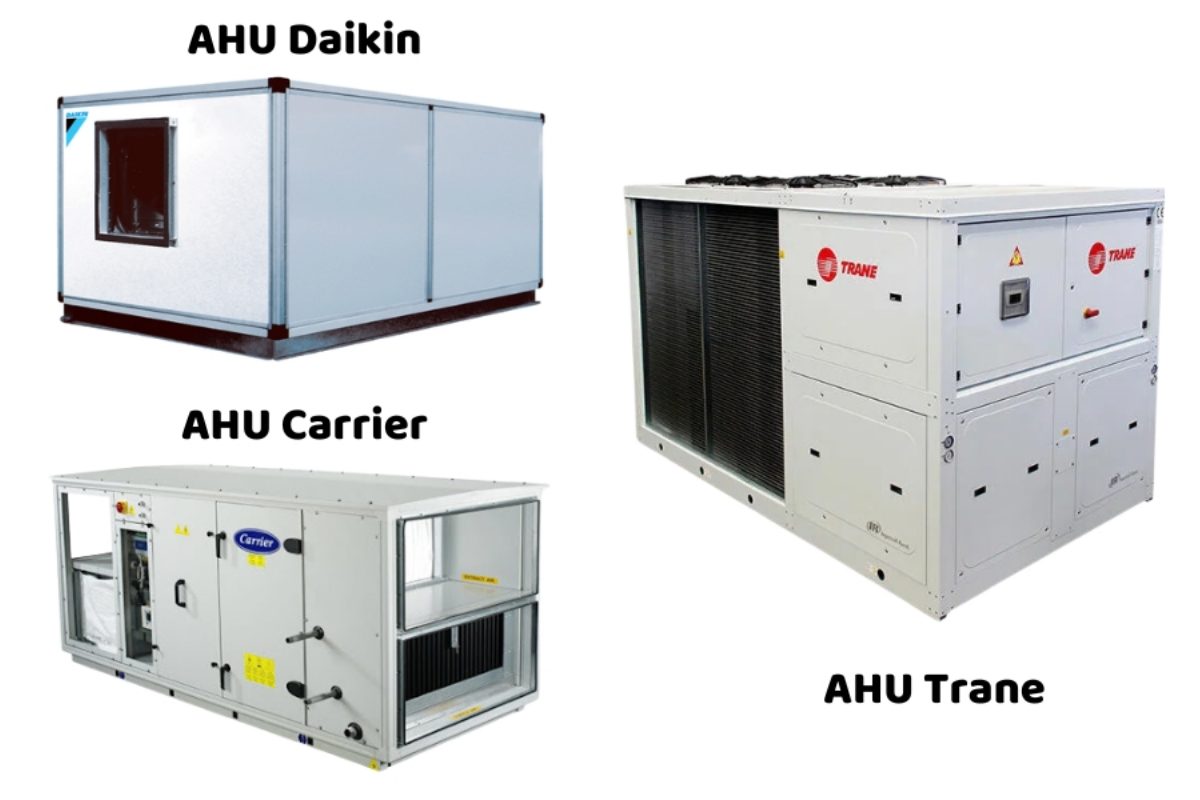
Leading AHU manufacturers currently include Daikin, Trane, and Carrier, providing high-quality solutions for HVAC systems.
Leading AHU manufacturers currently include Daikin, Trane, and Carrier.
Key Considerations for AHU Operation and Maintenance
Scheduled Maintenance Programs
Periodic AHU maintenance is a critical factor in extending equipment service life and maintaining optimal performance.
Common Issues and Troubleshooting
Common AHU operational issues include filter clogging, unstable fan operation, or electrical faults. Proper maintenance minimizes these occurrences.
Impact of Maintenance on AHU Service Life and Efficiency
Proper maintenance sustains AHU operational efficiency, extends equipment lifespan, and minimizes repair and replacement costs.
Conclusion
AHUs are an indispensable part of HVAC systems , ensuring indoor air remains in optimal condition regarding temperature, humidity, and cleanliness. Understanding AHUs, their operation, and their benefits facilitates informed equipment selection for your projects. Do not forget to perform regular AHU maintenance at Khoi Minh to ensure performance and extend system service life!