


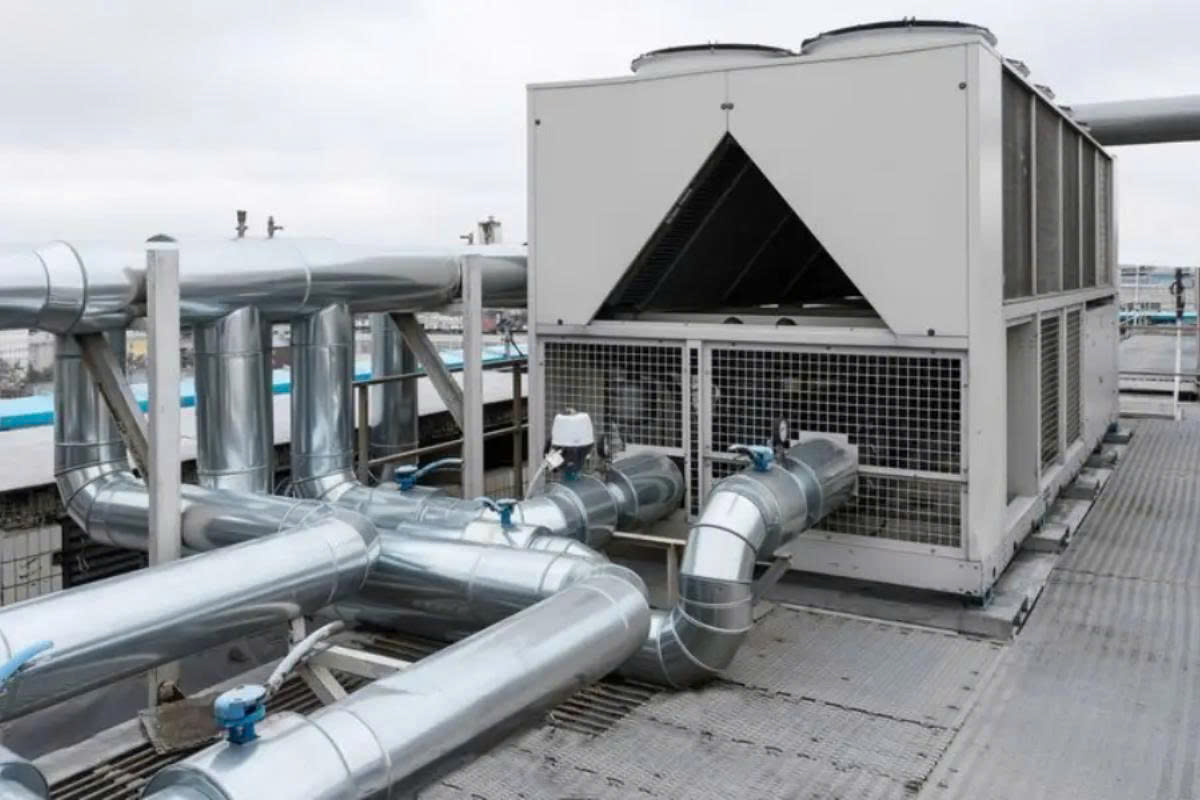
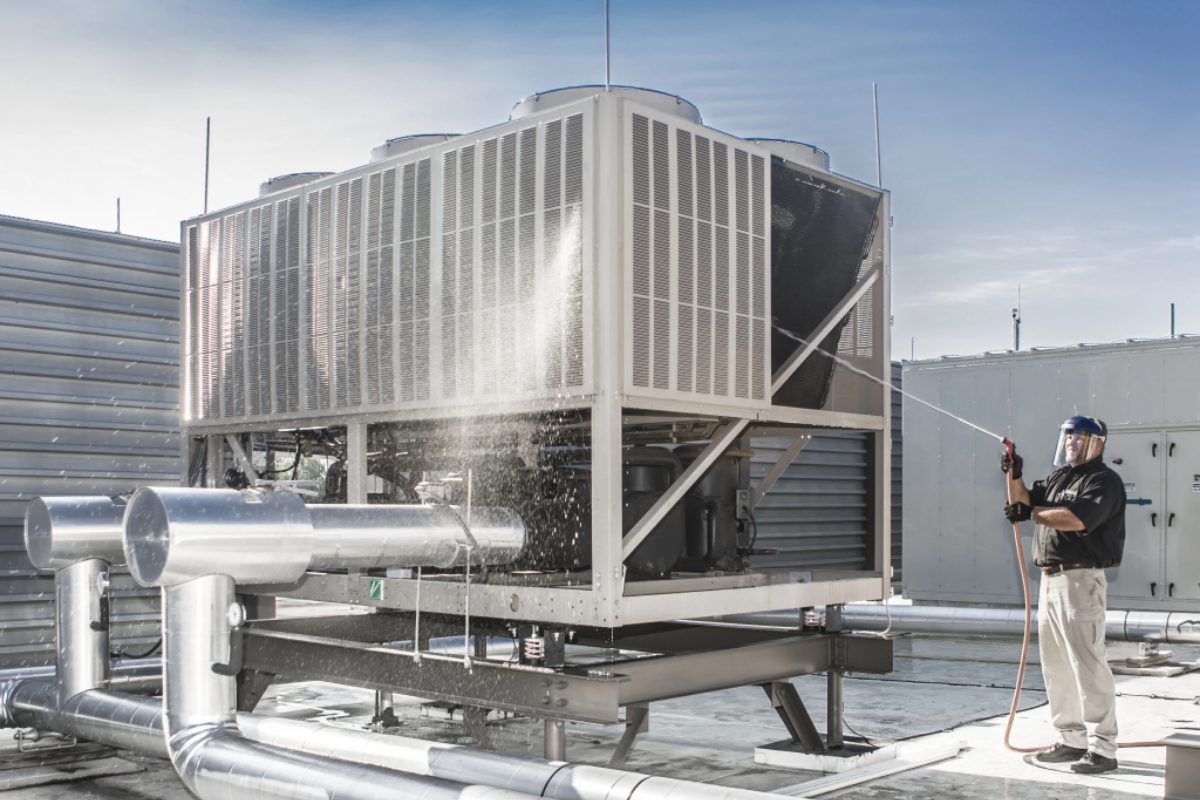
Definition of a Chiller: Concept, Structure, and Functions
A Chiller is a refrigeration unit used in HVAC systems and industrial cooling to maintain stable temperatures for production processes. It is particularly vital in industries requiring consistent thermal conditions, such as food processing, pharmaceuticals, and storage. Water is cooled after passing through the evaporator, typically entering at 12°C and exiting at 7°C.
Basic Structure of a Chiller and Component Functions
A Chiller system consists of five main component:
- Compressor
- Condenser
- Expansion Valve
- Evaporator
- Control System
Functions of each component:
Compressor: Compresses refrigerant (typically Freon or Ammonia) from a low-pressure gas state into a high-pressure, high-temperature gas. After compression, the refrigerant is discharged to the condenser.
Condenser: Cools the compressed refrigerant, converting it from a hot gas into a liquid. Condensers use water or air to reject heat from the refrigerant. The condensed liquid refrigerant then proceeds to the next stage.
Expansion Valve: Reduces the pressure of the liquid refrigerant before it enters the evaporator. Through the expansion valve, the refrigerant expands and its temperature drops, preparing it for heat absorption in the evaporator.
Evaporator: Cools the medium (typically water or air) by absorbing heat from the surroundings. Liquid refrigerant from the expansion valve evaporates (changes to gas) as it contacts the medium, absorbing heat and lowering the temperature.
Control System and Sensors: Manages the entire refrigeration process, monitoring parameters such as temperature, pressure, and refrigerant flow to ensure efficient and safe operation.
Other components:
Accumulator: Stores refrigerant and protects the compressor from liquid slugging or oil issues, maintaining compression stability.
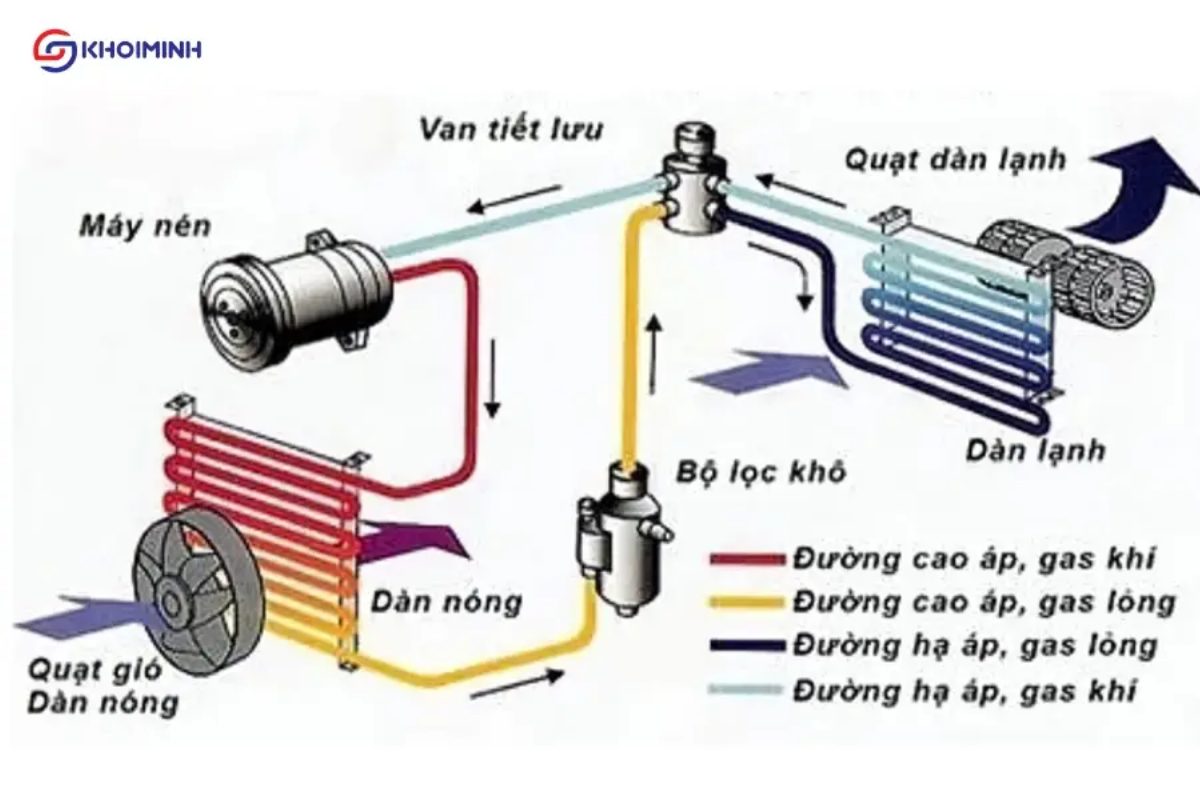 Basic Structure of a Chiller and Component Functions
Piping and Valve System: Connects chiller components and directs refrigerant flow through the compressor, condenser, expansion valve, and evaporator. (Source: vietnamcleanroom)
Summary:
- Compressor: Compresses refrigerant, creating high pressure and temperature.
- Condenser: Cools and converts refrigerant into liquid form.
- Expansion Valve: Reduces liquid refrigerant pressure.
- Evaporator: Cools the medium through heat absorption.
- Oil Reservoir: Separates and stores oil for the compressor.
- Control System: Monitors and regulates chiller operations.
- Piping System: Transports refrigerant between components.
Water Chiller Systems (Centralized Water Air Conditioning)
A Chiller system, or Water Chiller system, is an efficient cooling solution commonly used in large buildings, industrial zones, and large-scale applications. The chiller operates by cooling water, which is then used for heat exchange with air via devices such as AHUs (Air Handling Units) and FCUs (Fan Coil Units). This system offers high efficiency, energy savings, and reduced operational costs.
Chiller System Models
Chiller systems, as a critical part of HVAC, are designed in two common models: Air-Cooled Chillers and Water-Cooled Chillers. Each type has distinct structures, advantages, disadvantages, and application ranges tailored to specific project needs.
- Air-Cooled Chiller System
Operating Principle: This system uses air as the heat exchange medium to cool the refrigerant. Heat from the refrigerant is rejected to the atmosphere through heat exchange coils assisted by fans.
Technical Characteristics:
- Does not require a cooling tower or condenser water piping system.
- Simple structure, easy to install and maintain.
Advantages:
Space-saving: No cooling tower required, suitable for projects with restricted footprints like high-rise buildings or crowded urban areas.
Simplified Operation: Since water is not used for heat rejection, issues like scaling or corrosion in condenser water lines are avoided.
Disadvantages:
Lower Efficiency: Efficiency is lower than water-cooled systems, especially in hot and humid climates.
Higher Noise: The fans typically generate more noise, which may impact the surrounding environment.
Applications: Suitable for small to medium projects such as small factories, medium office buildings, small commercial centers, or areas with limited water sources.
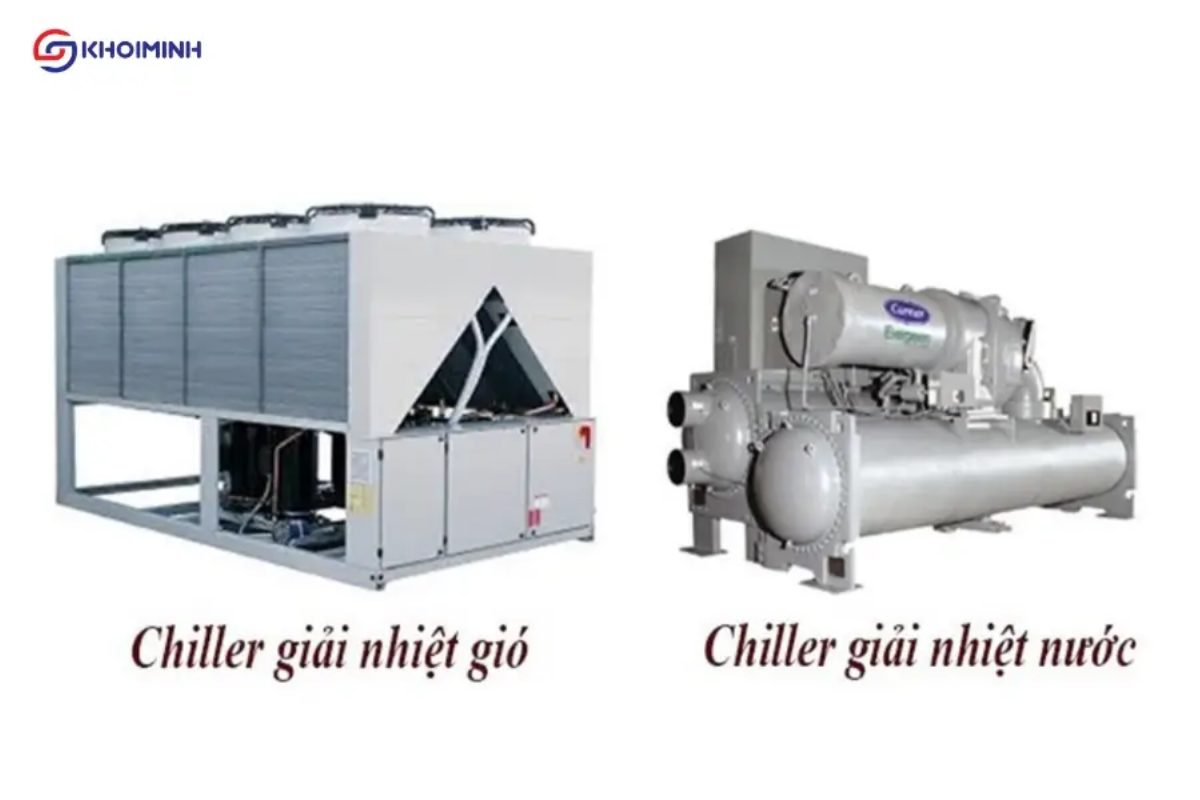 Chiller giải nhiệt gió (Air-Cooled Chiller) và chiller giải nhiệt nước (Water-Cooled Chiller)
- Water-Cooled Chiller System
Operating Principle: This system uses water from a cooling tower to absorb heat from the refrigerant in the condenser. The warm water is then cooled back down in the cooling tower to continue the cycle.
Technical Characteristics:
- Requires a cooling tower, condenser water pumps, and complex piping.
- High cooling efficiency, particularly under large thermal loads.
Advantages:
High Efficiency: Water has better heat transfer properties than air, making the system more efficient for large-scale projects.
Energy Saving: Consumes less electricity per unit of cooling compared to air-cooled chillers.
Stable Operation: Less affected by ambient weather conditions, ensuring consistent cooling performance year-round.
Disadvantages:
High Installation Cost: Requires higher initial investment due to the cooling tower, pumps, and complex piping.
Regular Maintenance Required: The system must be cleaned periodically to prevent scaling and corrosion in the water lines.
Applications: Ideal for large-scale projects and high cooling requirements such as manufacturing plants, large commercial centers, hospitals, hotels, and high-rise office buildings.
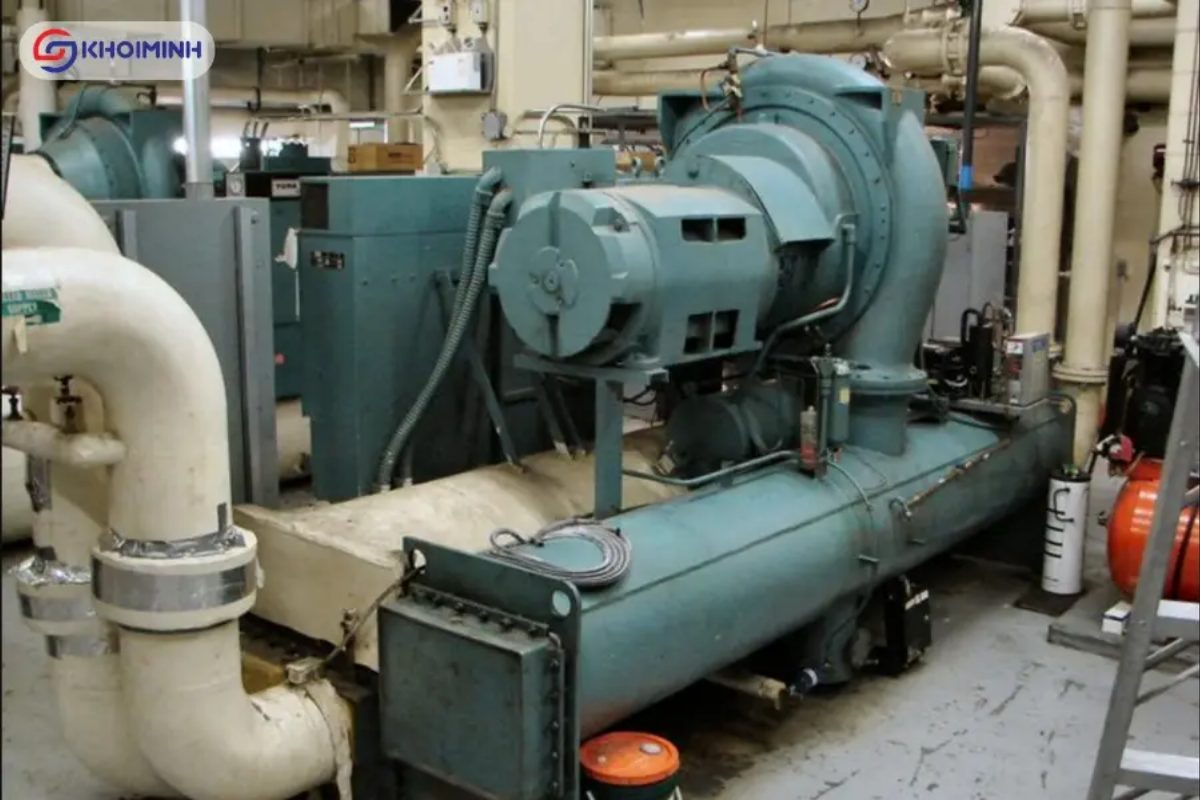
Water-Cooled Chiller System
Chiller Functions in a Water Chiller System
The Chiller plays a central role with the following tasks:
Chilled Water Supply:Generates chilled water distributed to AHUs/FCUs to cool air in large spaces.
Enhanced Cooling Efficiency:Ensures stable cooling capacity even under heavy thermal loads.
Energy Saving: Optimized design and modern technology minimize energy consumption, especially in water-cooled systems.
Reliability: Designed for long-term stable operation, minimizing breakdown risks and maintenance costs.
Operating Principles and Refrigeration Cycle of a Chiller System
The chiller refrigeration process follows a closed loop where the refrigerant changes states between liquid and gas to absorb and release heat.
Refrigerant Compression (Compressor):
- The process begins as the compressor suctions low-pressure, low-temperature refrigerant vapor from the evaporator. The compressor then compresses this refrigerant, significantly increasing both its pressure and temperature.
- Result:: High-pressure, high-temperature refrigerant gas.
Refrigerant Cooling (Condenser)
- The high-temperature, high-pressure gas is discharged into the condenser. Here, the refrigerant rejects heat to the surrounding medium (typically water or air).
- Process: Through heat exchange, the hot refrigerant cools down and undergoes a phase change from gas to liquid.
- Result: High-pressure liquid refrigerant.
Refrigerant Pressure Reduction (Expansion Valve)
- The high-pressure liquid refrigerant flows through the expansion valve, where its pressure is rapidly reduced.
- Process: Upon passing through the expansion valve, the refrigerant undergoes a sudden drop in pressure and temperature, resulting in a low-temperature liquid state.
- Result: Low-temperature, low-pressure liquid refrigerant.
Heat Absorption (Evaporator)
- The low-temperature liquid refrigerant enters the evaporator, where it absorbs heat from the medium to be cooled (typically chilled water or air within the HVAC system).
- Process: Upon contact with the warmer medium, the refrigerant evaporates (changing from liquid to gas) and absorbs latent heat from the medium.
- Result: The medium's temperature decreases as heat is transferred to the refrigerant, effectively cooling the water or air.
- Refrigerant Return to Compressor
- After absorbing heat and transitioning into a low-pressure, low-temperature gas, the refrigerant returns to the compressor to begin a new cycle.
- Process: The compressor continues to suction low-pressure gas, restarting the refrigeration cycle.
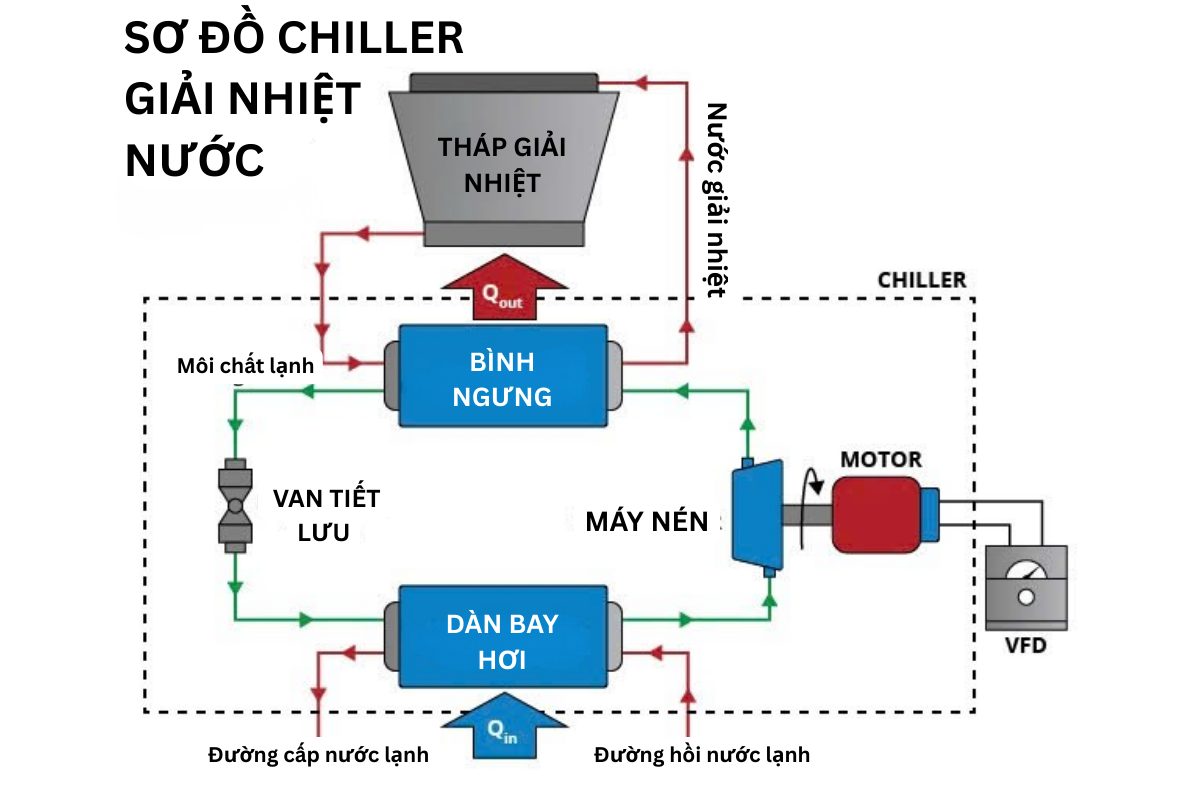
Operating Principles and Refrigeration Cycle of a Chiller System
Summary of the Refrigeration Cycle:
- Compressor increases pressure and temperature.
- Condenser cools and liquifies the refrigerant.
- Expansion Valve drops pressure and temperature.
- Evaporator absorbs heat to cool the medium.
- Refrigerant returns to the compressor; cycle repeats.
Each step in this cycle is critical to ensuring efficient and stable chiller system performance.
Applications of Chiller Systems in Life and Industry
- Centralized HVAC (AHU/FCU)::
- High-Rise Buildings: Office buildings, hotels, and commercial centers use chillers for AHU/FCU systems to maintain a stable, comfortable environment and save energy.
- Residential: Apartments and private residences use chillers for efficient air conditioning and temperature control.
- Civil Industry::
- Food Processing: Maintains ideal temperatures for food production, storage, and beverages.
- Pharmaceuticals: Stores drugs and chemicals at stable temperatures to ensure quality.
- Chemical Industry: Vital for maintaining temperatures to optimize production performance and protect equipment.
- Industrial Manufacturing::
- Machinery Cooling: Cools large machinery, heating equipment, and refrigeration units to prevent overheating and failure.
- Process Cooling: Maintains required temperatures for specific processes like powder coating, metal treatment, and plastic molding.
- Healthcare:
- Hospitals and Clinics: Provides cooling for medical equipment (MRI, ultrasound) and operating rooms to ensure safety.
- Care Facilities: Regulates temperatures in ICUs and specialized treatment areas.
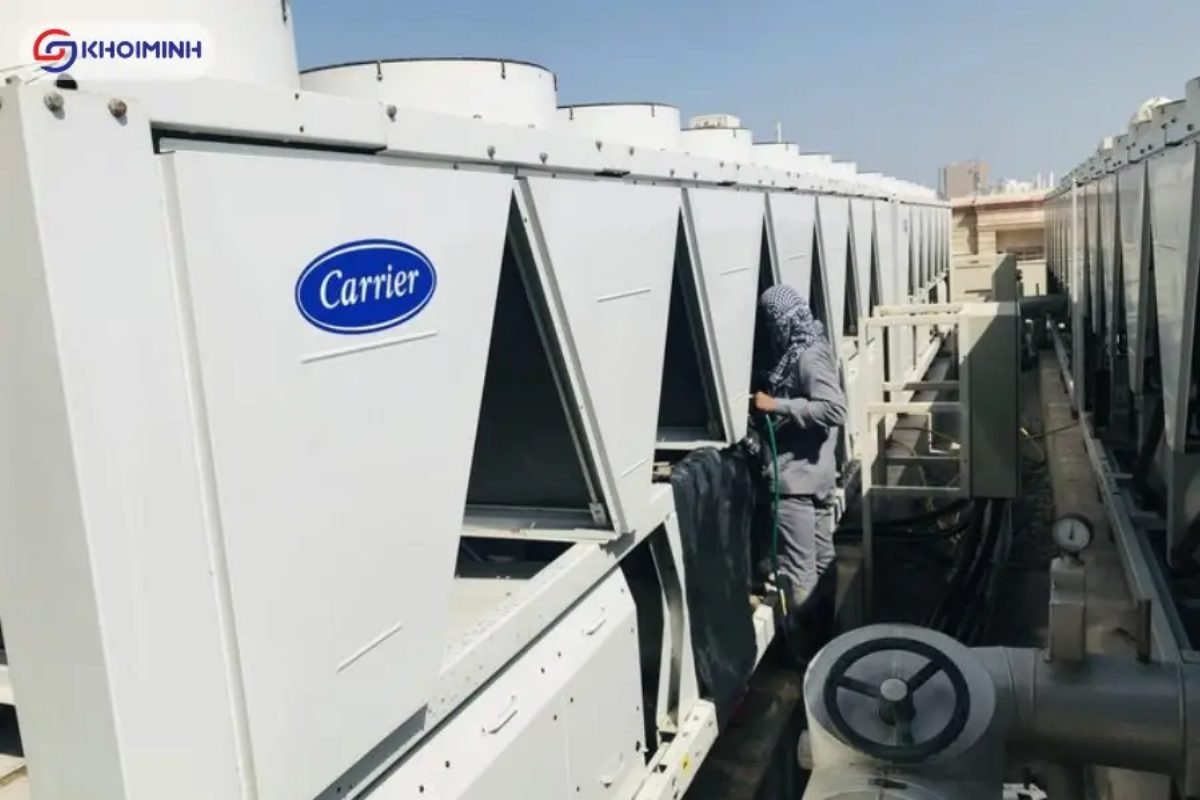
Benefits of Chiller Systems
- High Cooling Efficiency: Especially when using water-cooled models.
- Energy Savings: Reduces electricity consumption and operational costs.
- Durability and Easy Maintenance: Robust design ensures long-term lifespan and reduced overhead.
Chiller system applications extend beyond basic cooling, optimizing efficiency and reducing costs in both commercial and industrial sectors.
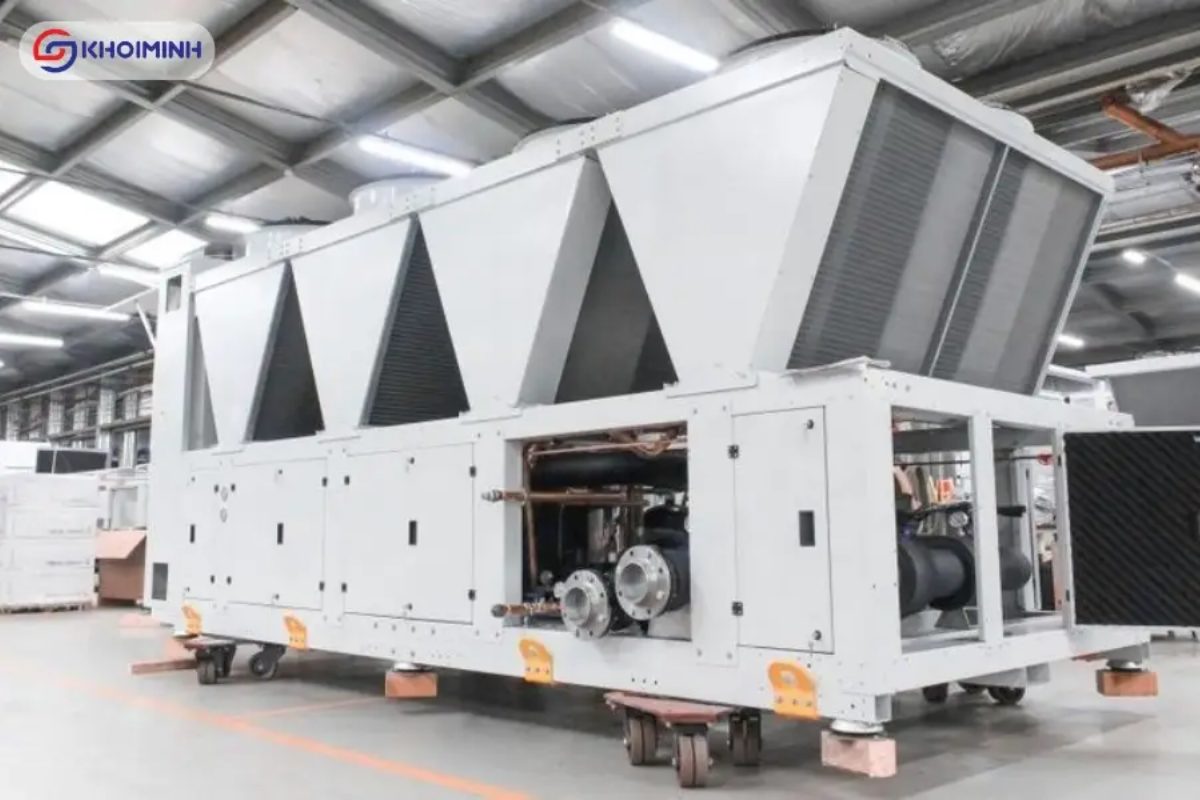 Benefits of Chiller Systems
Criteria for Selecting a Chiller
Reputable Supplier
Ensures quality and professional after-sales service (warranty and maintenance)
Operational Performance
Performance assessment is essential to ensure the chiller meets cooling demand and optimizes operating costs.
Reasonable Cost
Evaluate initial and long-term operating costs to ensure optimal investment value.
Key Considerations for Chiller Installation and Operation
Standardized Chiller Installation Guide
Chiller installation requires compliance with technical procedures to ensure safety and performance. The installation site must be well-ventilated to maintain stable operation and extend equipment service life.
Essential Installation Components
Key components, such as heat exchangers and cooling towers, must be correctly installed to ensure maximum chiller efficiency.
Why Periodic Chiller System Maintenance is Essential?
Periodic maintenance facilitates early issue detection, optimizes performance, and extends chiller lifespan. This also minimizes future major repair costs.
The maintenance procedure includes component cleaning, pressure checks, refrigerant charging, and heat exchanger inspections to ensure optimal chiller operation.
Khoi Minh – Leading HVAC solutions for your business.
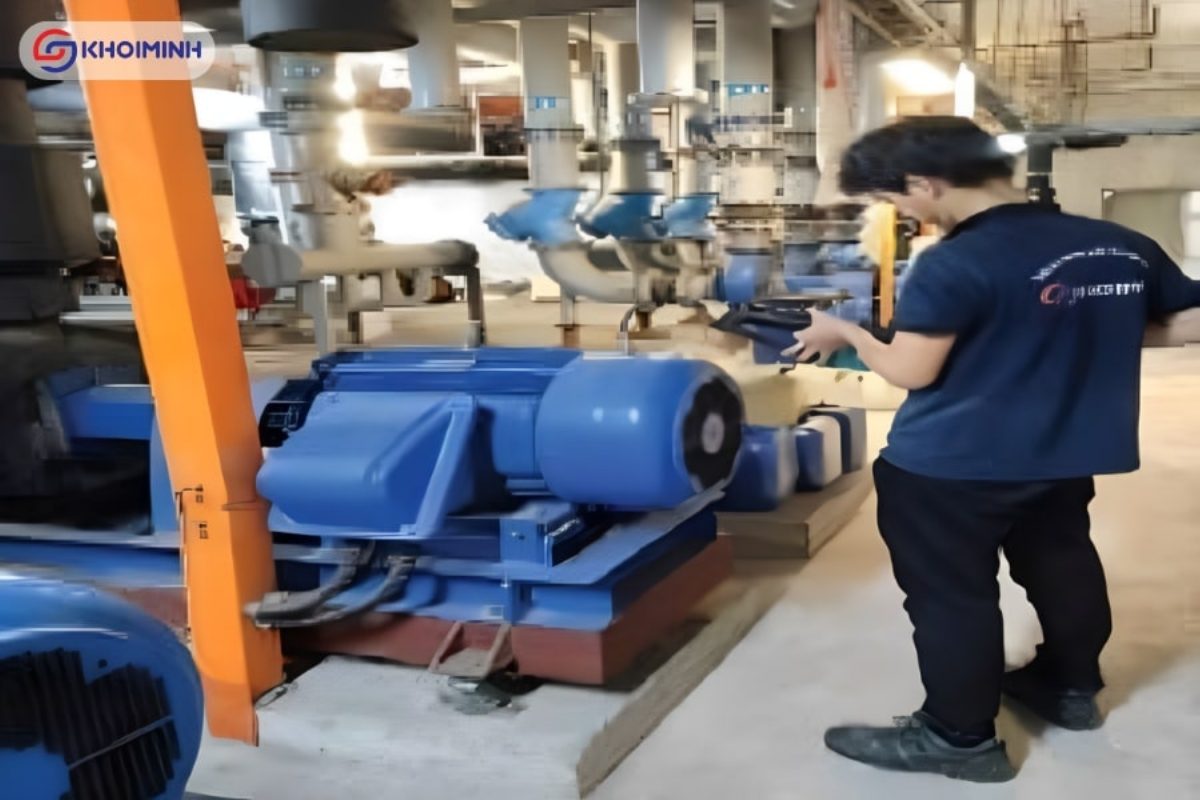
Khoi Minh is a professional provider of comprehensive maintenance services for HVAC system components, ranging from AHU/FCU systems and cooling towers to critical parts such as compressors, heat exchangers, valves, sensors, and control panels.
With a team of highly experienced and specialized technicians, Khoi Minh ensures all maintenance services follow standardized procedures for timely fault detection and rectification, ensuring efficient operation, energy savings, and extended equipment lifespan. Khoi Minh is committed to providing optimal solutions across all industries, including factories, office buildings, and commercial or residential complexes.
Considerations for Chiller Operation and Maintenance
Proper Operation to Extend Service Life
Proper operation ensures chiller efficiency, energy savings, and extended equipment service life.
Periodic Chiller Maintenance
Periodic maintenance maintains stable cooling performance and minimizes the risk of equipment failure.
Conclusion
A thorough understanding of chillers enables businesses to optimize cooling costs, increase equipment lifespan, and maintain stable production performance. Selecting the right chiller and performing proper maintenance are ideal solutions for environments requiring precise temperature control.